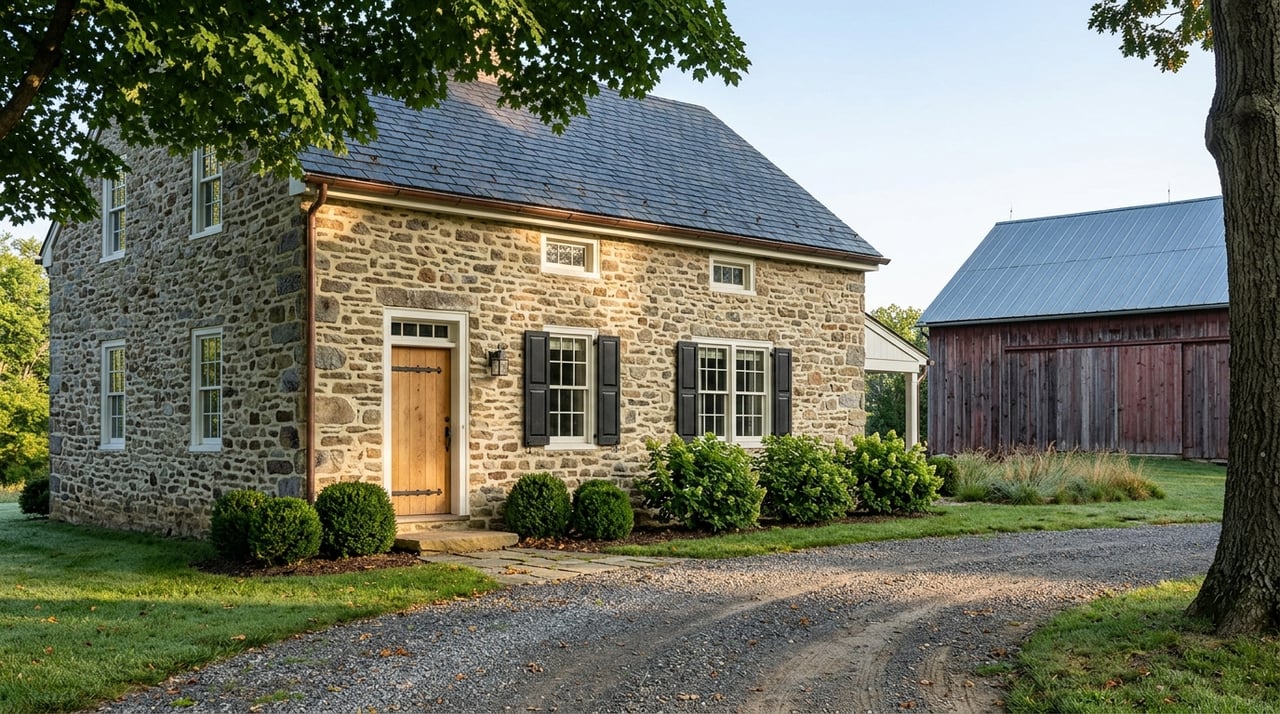
If you picture farmhouse living as a trend, Buckingham may surprise you. Here, it feels less like a look and more like a landscape shaped over centuries by agriculture, stone architecture, and village crossroads. If you are drawn to the idea of a home with land, outbuildings, and a strong sense of place, Buckingham offers a version of country living that still feels grounded and connected. Let’s take a closer look.
Farmhouse living starts with the land
In Buckingham Township, farmhouse living is tied to the countryside itself. The township covers 33 square miles of gently rolling land influenced by Buckingham Mountain, streams, and productive soil, and agriculture has remained a defining part of local identity for generations. According to the Buckingham Township history page, farming has been the township’s principal industry since its founding.
That agricultural identity is not just part of the past. As of 2025, the township says 6,475 acres are permanently protected from development, a reflection of long-term land stewardship and a local commitment to preserving open space and working farms. The township also notes that Buckingham was the first municipality in Bucks County to create its own land-preservation program after voters approved a 1995 referendum.
For you as a buyer or homeowner, that matters. It helps explain why parts of Buckingham still feel open, scenic, and distinctly rural, even as the region has evolved over time.
The architecture feels rooted, not staged
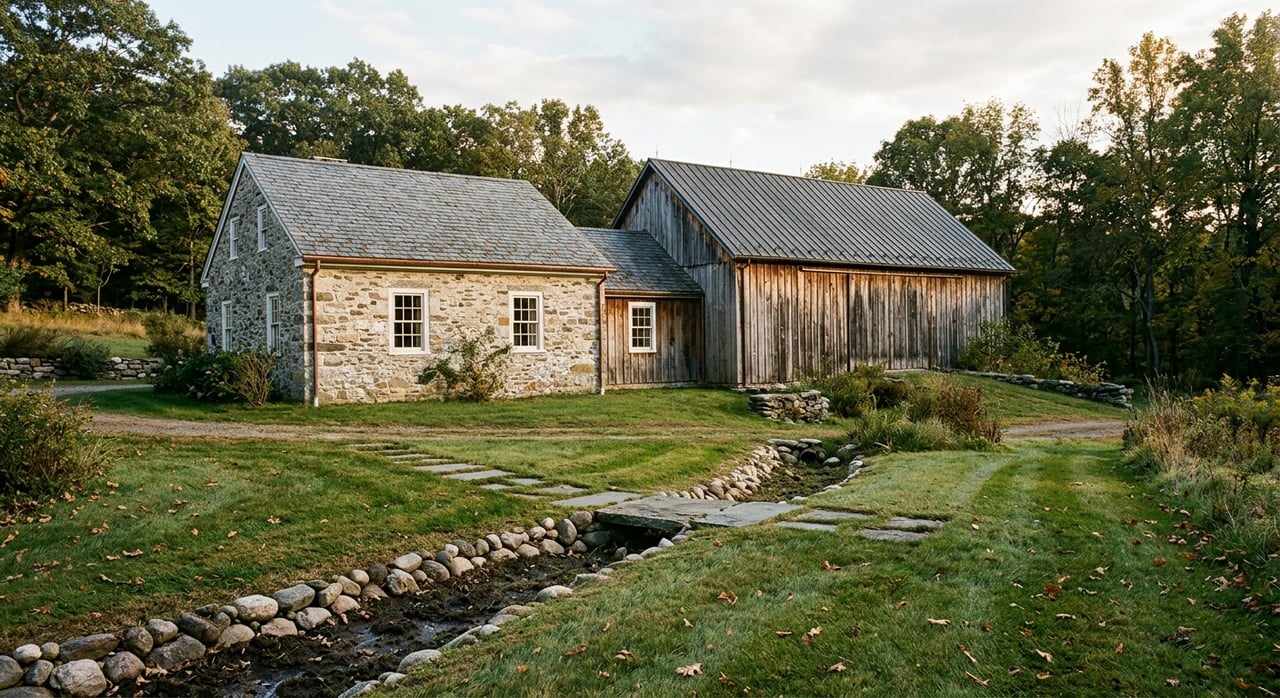
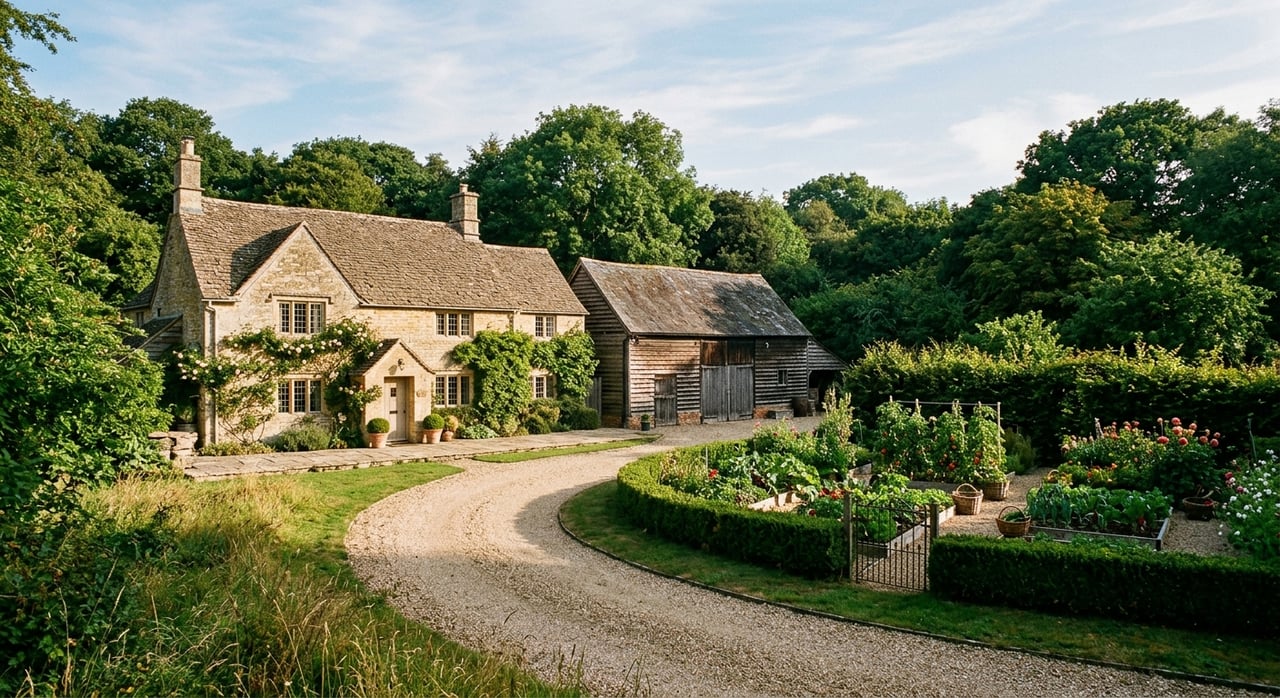
One of the clearest signs of farmhouse living in Buckingham is the architecture. The township explains that local building patterns reflect both English and German settlement traditions, which is why old stone houses and barns are such a recognizable part of the area’s visual character. You see that influence in stonework, attached wings, barns, smokehouses, and wagon houses that still define many older farm properties.
This is part of what makes Buckingham feel distinctly Bucks County. Rather than a single farmhouse style, you often find homes and property layouts that grew over time, with practical additions and outbuildings that speak to how the land was used. The result is a built environment that feels layered, useful, and authentic.
The Buckingham Township history overview points to several landmarks that help tell that story. The Buckingham Friends Meeting House in Lahaska, completed in 1768, is described by the Library of Congress as one of the most finely articulated meeting houses in the Delaware Valley, while the James B. Fell House includes a stone house, wagon house, smoke house, and stone wall that reflect the area’s long agricultural and architectural history.
Outbuildings are part of the story
In many places, farmhouse living is reduced to interior finishes and decor. In Buckingham, it is often the full property composition that creates the experience. Older residences may be paired with barns, wagon houses, smokehouses, stone walls, and long driveways that frame the approach to the home.
That matters because farmhouse living here is not only about how a house looks from the front porch. It is also about how the home sits on the land, how field edges shape the view, and how secondary structures add flexibility and character. Even when a property is no longer a working farm, those elements often preserve the rhythm of an agricultural setting.
The township’s land preservation information makes this connection clear. Protecting farms, according to the township, also protects scenic and historic character while supporting a healthy farm economy.
Daily life is organized by villages
Another part of farmhouse living in Buckingham is how you move through the area day to day. Instead of one dense downtown, the township is organized around villages and crossroads, each contributing to the broader sense of place. The township highlights communities including Holicong, Forest Grove, Buckingham Valley, Lahaska, Buckingham Village, Cross Keys, Wycombe, Spring Valley, Mechanicsville, Pineville, and Furlong on its village guide.
For many buyers, this pattern is part of the appeal. You get a more rural setting, but daily life is still anchored by recognizable local nodes. Buckingham Village sits at Durham Road and Old York Road, Lahaska lies along the Buckingham-Solebury border, and Wycombe straddles the Buckingham-Wrightstown line.
Lahaska adds another layer of character. The township notes that Victorian-era homes there have been repurposed as shops, antique stores, and galleries, which gives parts of the township a lived-in, adaptive quality rather than a purely residential one.
Rural does not mean isolated
Buckingham’s appeal often comes from balancing privacy with access. The township’s public works information identifies Route 202, Route 263, Route 313, and Route 413 as key PennDOT roads in the area, helping connect village centers, residential pockets, and surrounding destinations. That road network supports a lifestyle where you may live among fields and stone buildings without feeling cut off.
This kind of access is important if you are considering a farmhouse, country house, or land-forward property. A home can feel peaceful and tucked away while still allowing for practical everyday movement through the township and beyond. In a market like Buckingham, that balance often shapes how buyers think about long-term livability.
Public green space also contributes to the rhythm of daily life. Buckingham’s parks commission notes three township parks, including Hansell Park, a 39-acre site with walking trails, a pond, and a playground, reinforcing the area’s connection to open space and outdoor living.
Preservation shapes the feel of the township
What often makes Buckingham stand out is that preservation is not accidental. It is supported through local policy and public commitment. The township has both a Historic Commission and an Agricultural and Open Space Preservation Committee, which reflects a clear civic interest in protecting historic and rural character.
For you, this can translate into a stronger sense of continuity. The landscape, village form, and historic structures are not simply leftovers from another era. They are part of an ongoing effort to maintain what gives Buckingham its identity.
That does not mean every property is historic or every home is a classic stone farmhouse. It does mean the broader setting often retains qualities that buyers seeking farmhouse living tend to value most: open land, architectural texture, and a feeling that the area still reads as countryside.
What the housing profile suggests
Buckingham is an established, largely owner-occupied market. The latest U.S. Census QuickFacts for Buckingham Township list 20,844 residents as of July 1, 2024, which is essentially flat from the 2020 census count of 20,851. Census data also report a 93.6% owner-occupied housing rate, a median owner-occupied home value of $708,100, and a median household income of $190,230 for 2020-2024.
Those numbers point to a stable market where ownership is the norm and home values reflect the township’s desirability. If you are exploring farmhouse living here, it is helpful to understand that Buckingham is not just picturesque. It is also a mature residential market where land, character, and long-term stewardship carry real value.
What buyers often love about Buckingham farmhouses
While every property is different, certain themes come up again and again in Buckingham:
- Stone architecture rooted in local building traditions
- Outbuildings and secondary structures that add utility and visual character
- Longer approaches and open views shaped by fields, trees, and preserved land
- Village-based daily life rather than one central downtown
- A rural setting with road access through Routes 202, 263, 313, and 413
- A strong preservation culture that supports scenic and historic identity
For some buyers, the draw is architectural. For others, it is the feeling of space, privacy, and continuity with the landscape. Often, it is both.
Farmhouse living is a lifestyle choice
In Buckingham, farmhouse living is not only about owning an older home or a house with acreage. It is about choosing a setting where the land still matters, where village names carry meaning, and where architecture reflects long local patterns instead of short-term trends. That gives the area a calm, established quality that many buyers find hard to replicate elsewhere.
If you are considering a move to Buckingham or preparing to sell a character-rich country property, it helps to work with someone who understands how setting, architecture, and lifestyle come together in this market. If you would like thoughtful guidance on buying or selling in Bucks County, you can schedule a free consultation with Jacqueline Haut Evans.
FAQs
What does farmhouse living in Buckingham usually mean?
- In Buckingham, farmhouse living usually refers to a rural or land-oriented lifestyle shaped by preserved open space, older stone homes, barns or outbuildings, village crossroads, and a strong agricultural backdrop.
Are there still working farms in Buckingham Township?
- Yes. Buckingham says agriculture remains central to the township’s identity, and 6,475 acres are permanently protected from development.
What makes Buckingham architecture feel distinctly Bucks County?
- The township links Buckingham’s architectural character to English and German settlement traditions, which appear in old stone houses, barns, attached wings, smokehouses, and wagon houses.
Is Buckingham rural or convenient for everyday travel?
- It is both. Buckingham has a rural village pattern, but the township also identifies Routes 202, 263, 313, and 413 as major roads that help connect residents to surrounding areas.
Does Buckingham support historic and land preservation?
- Yes. The township has a Historic Commission as well as an Agricultural and Open Space Preservation Committee, showing ongoing institutional support for preserving local character.