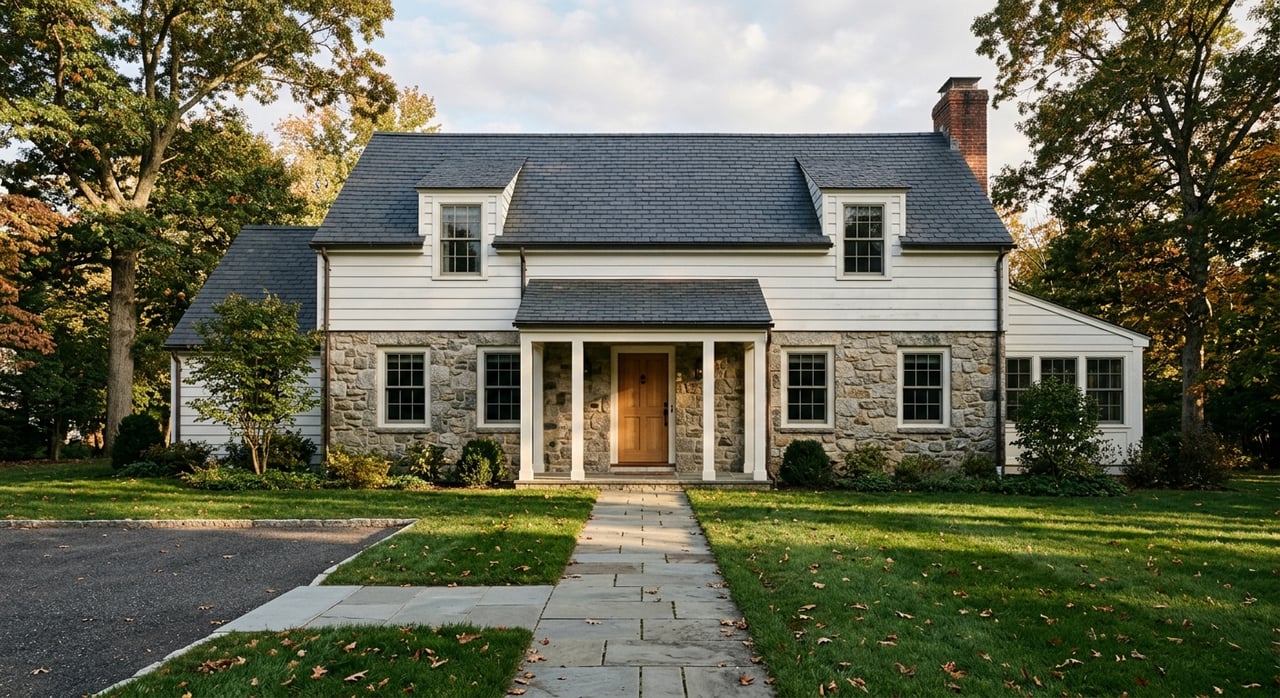
If you are trying to make sense of today’s Doylestown housing market, you have probably already noticed one thing: the numbers do not tell one simple story. Some homes move quickly, some sit longer, and prices can vary widely depending on the property, the setting, and even the ZIP code. The good news is that once you look at Doylestown as a collection of smaller micro-markets rather than one single market, the picture becomes much clearer. Let’s dive in.
Doylestown Market Snapshot
Doylestown remains active, but it is not moving at one uniform pace. According to Realtor.com’s local market snapshot, March 2026 showed 123 homes for sale, a median list price of $819,950, 41 median days on market, and a 100% sales-to-list ratio.
At the same time, Redfin’s closed-sale snapshot, as summarized in the research provided, puts the median sale price at $581,000, with homes selling in about 40 days, receiving 5 offers on average, and closing at about 97.1% of list price. Put simply, demand is still steady, but buyers appear more selective than they were in the most overheated periods.
Why Price Numbers Differ
One of the most common points of confusion is why market sites show different price figures for the same town. The reason is simple: they are measuring different things.
As noted in Zillow’s home values data, Zillow’s ZHVI reflects a modeled typical home value, while Redfin focuses on closed-sale medians and Realtor.com emphasizes active listings and listing prices. That means you should read these figures as complementary indicators, not as one exact definition of value.
For buyers and sellers, this matters because pricing decisions in Doylestown should be based on the right subset of comparable homes. A broad townwide number may offer context, but it rarely tells the full story for a specific property.
Doylestown Is a Micro-Market Town
The most important takeaway in today’s Doylestown market is this: Doylestown behaves like a set of micro-markets. That is true across the borough, township areas, established neighborhoods, and the historic core.
Within the main ZIP codes, Realtor.com’s ZIP code data shows 18901 with a median listing price of $729,900 and 28 days on market. In 18902, the median listing price is higher at $899,900, with 102 days on market.
Zillow’s typical home values show a similar split, at $666,835 in 18901 and $778,291 in 18902. In practical terms, that tells you two homes with a Doylestown address may compete in very different conditions depending on where they sit and what they offer.
What 18901 and 18902 Show
For a closer look, the ZIP-level data is especially helpful. In 18901, there are 72 homes for sale, homes average about 28 days on market, and the sale-to-list ratio is 97%.
In 18902, there are 51 homes for sale, the sale-to-list ratio is 101%, and homes average 102 days on market, according to the same Realtor.com market source. That combination suggests a thinner, less uniform market where the right home can still attract strong interest, but timing, condition, and pricing strategy matter more.
This is why Doylestown rewards specificity. If you are buying, you want to understand the exact pocket you are targeting. If you are selling, you want pricing and presentation tailored to your property’s true peer group, not just to a broad average.
Inventory Still Feels Tight
Even with spring momentum, inventory remains relatively constrained. Countywide context helps show why. Zillow’s county data places Bucks County’s typical home value at $517,600 with 766 for-sale listings, while the Suburban Realtors Alliance, as cited in the research provided, reported 843 active listings and 1.63 months of supply in Q3 2025.
That matters because a balanced market is often associated with about 6 months of supply. By comparison, current supply levels still suggest a market where well-positioned homes can stand out and where buyers may need to act with clarity when the right fit appears.
Doylestown’s most established pockets are even tighter. Realtor.com reports only 4 homes for sale in the Doylestown Historic District, which reinforces how limited supply can be in the town’s most distinctive areas.
Seasonality Shapes Opportunity
Like much of Bucks County, Doylestown follows a recognizable seasonal rhythm. According to BCAR market statistics, Bucks County had 248 new listings in December 2025, 355 in January 2026, and 416 in February 2026. A March 2025 report cited in the research showed 616 new listings, and BCAR’s April 2026 update described strong spring momentum, more buyers, and slightly improved inventory.
The practical takeaway is straightforward. Late winter may offer a little less competition, but it also brings fewer choices. Spring usually offers more selection, but it also tends to bring more buyer traffic.
That does not mean one season is always better than another. It means timing should match your priorities. If choice matters most, spring may be appealing. If your goal is to get ahead of the busiest stretch, earlier timing may be worth considering.
Historic Homes Add Another Layer
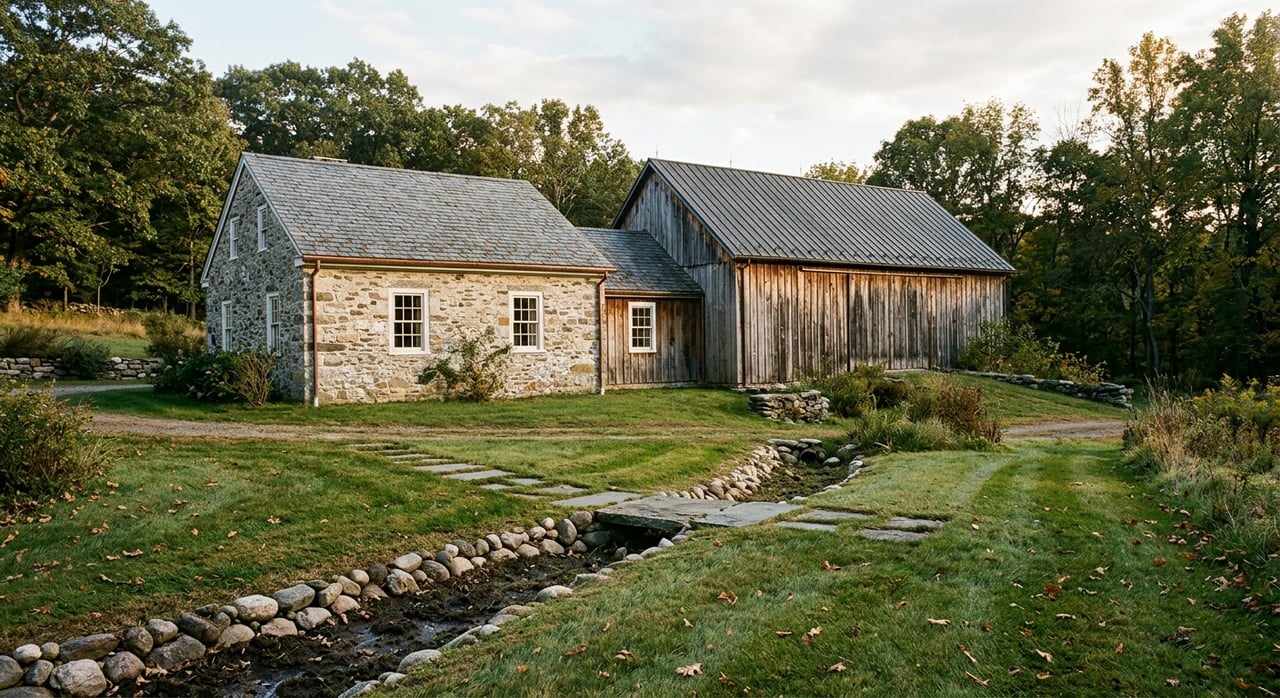
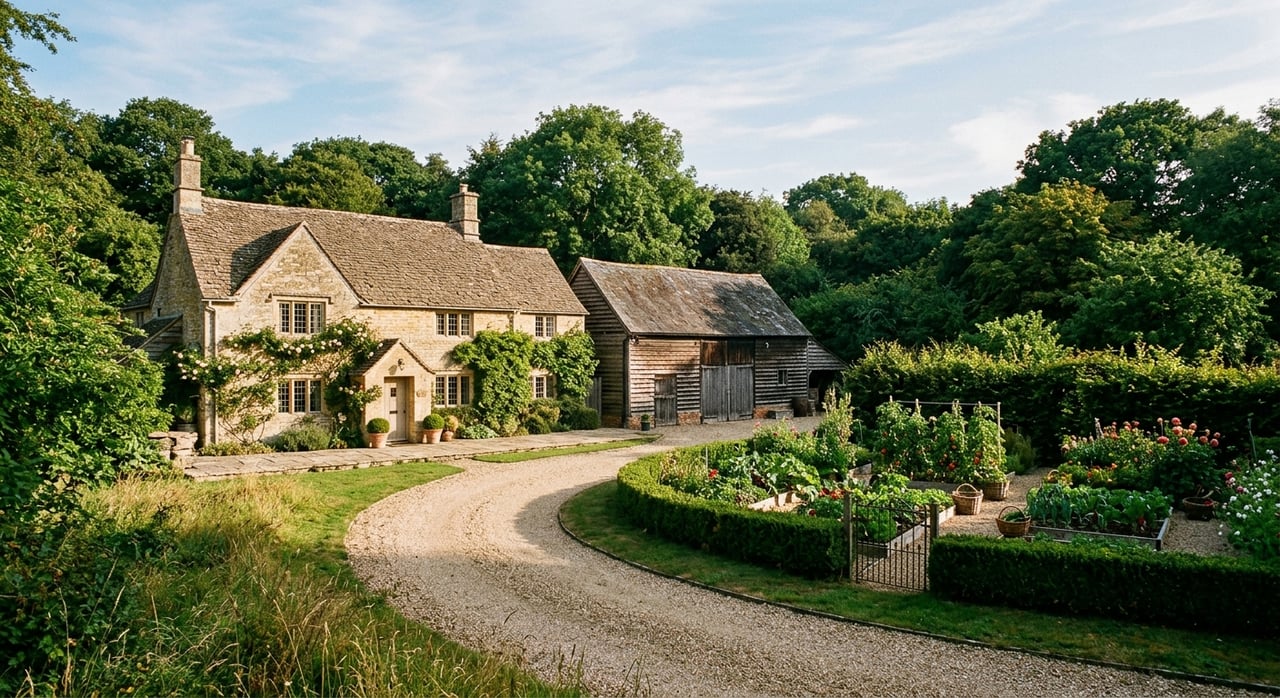
Doylestown’s character is a major part of its appeal, and its housing stock reflects that. The town core includes many older and architecturally distinctive homes rather than one uniform wave of newer subdivision inventory.
The Doylestown Borough Historic District includes a HARB overlay, and that review process can affect exterior changes, additions, new construction, demolition, and signs. For owners and buyers, that is more than a point of local color. It can directly shape renovation plans and maintenance decisions.
The National Park Service listing for the Doylestown Historic District describes architectural styles including Late Victorian, Federal, and Late 19th and 20th Century Revivals, with periods of significance spanning 1750 through 1949. Additional context from SAH Archipedia reinforces Doylestown’s long architectural history and its concentration of older stone houses and landmark buildings.
For buyers, that means charm often comes with questions about systems, maintenance, and future changes. For sellers, it means buyers are evaluating much more than bedroom count and square footage. They are also looking closely at exterior condition, stewardship, and how thoughtfully the home has been cared for.
What Buyers Should Watch
If you are buying in Doylestown, the biggest mistake is treating the market too broadly. A condo, townhouse, historic borough home, and estate property may all carry the same town name, but they do not compete in the same way.
Current public listings illustrate that spread. According to Zillow’s Doylestown listings, asking prices in 18901 range from about $169,900 for a condo to $2.45 million for higher-end homes. In 18902, listings include a $445,000 townhouse and estate properties above $4.8 million.
That range is your reminder to stay focused on the segment that fits your goals. When you compare homes, compare like with like. Looking at the right property type, location, condition, and setting will give you a much more useful view than relying on a single headline number.
What Sellers Should Know
If you are selling in Doylestown, today’s market still rewards thoughtful preparation. Strong demand does not erase the need for careful pricing, polished presentation, and strategic timing.
That is especially true for historic or character properties. Buyers in this segment are often responding to craftsmanship, setting, and narrative, but they are also paying attention to upkeep, systems, and any preservation-related considerations noted by the borough’s Historic District guidance.
Because the market is made up of micro-markets, broad averages are only a starting point. The strongest approach is to position your home against very specific comparable properties and present it in a way that helps buyers immediately understand both its practical strengths and its distinct personality.
The Bottom Line on Doylestown
Today’s Doylestown housing market is active, competitive in the right segments, and still shaped by limited inventory. But the clearest way to understand it is not through one average price or one market label. It is through the lens of micro-markets.
The historic core, 18901 neighborhoods, 18902 township and estate areas, and other established pockets each behave a little differently. If you approach Doylestown with that level of nuance, you will make better decisions whether you are buying your next home or preparing one for sale.
If you are thinking about buying or selling in Bucks County and want a more tailored read on your specific property or target area, Jacqueline Haut Evans offers thoughtful, design-minded guidance grounded in the character of the local market.
FAQs
What is the current housing market like in Doylestown, PA?
- Doylestown is active, with March 2026 data showing 123 homes for sale, a median list price of $819,950, and about 41 days on market, according to Realtor.com.
Why do Doylestown home prices look different on Zillow, Redfin, and Realtor.com?
- Each platform tracks a different metric, such as modeled home values, closed-sale medians, or active listing prices, so the numbers are best viewed as complementary rather than identical.
How do the 18901 and 18902 Doylestown ZIP codes differ?
- Based on Realtor.com data, 18901 has a lower median listing price and faster pace, while 18902 has a higher median listing price and longer days on market, showing that these areas behave differently.
Is inventory low in Doylestown right now?
- Yes. Inventory remains relatively tight, especially in established areas, and the Doylestown Historic District had only 4 homes for sale in the research provided.
What should buyers know before purchasing a historic home in Doylestown?
- Buyers should look closely at maintenance, older systems, exterior condition, and any Historic District review requirements that may affect future exterior changes.
What should sellers focus on in today’s Doylestown market?
- Sellers should focus on precise pricing, strong presentation, and property-specific preparation, especially because Doylestown homes compete within smaller micro-markets rather than one uniform market.