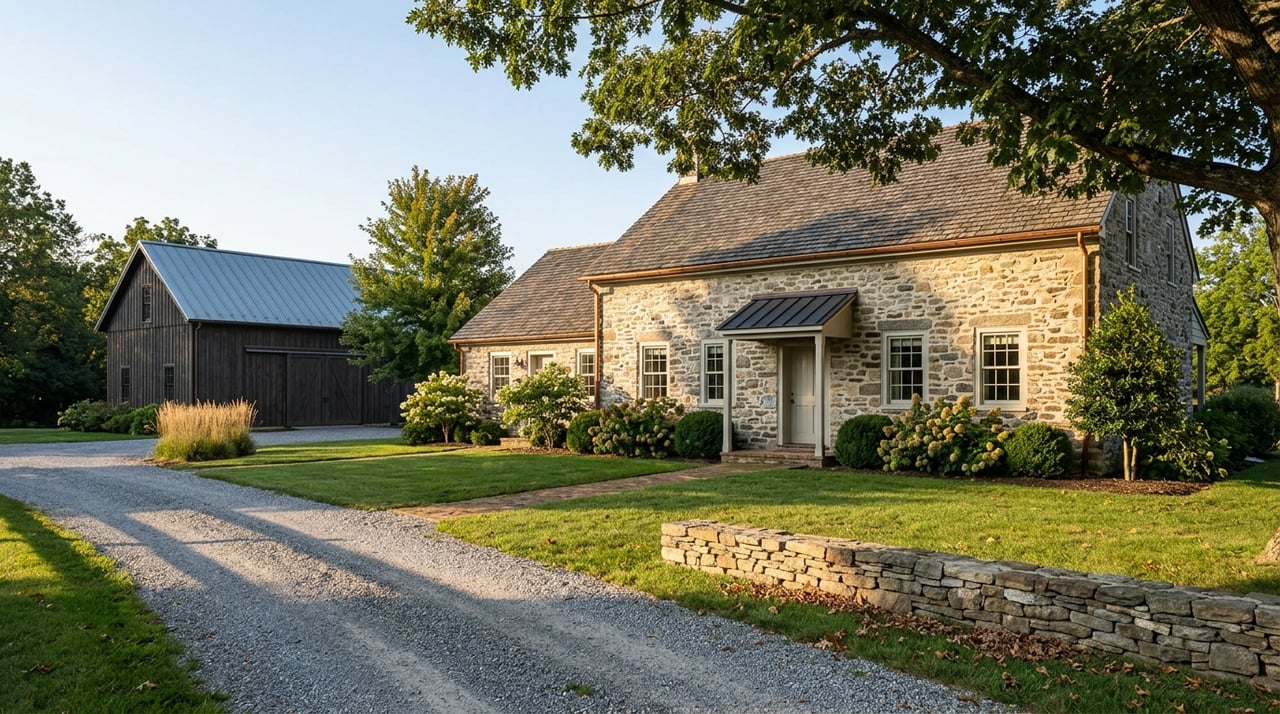
Are you drawn to places where the road itself tells a story? In Buckingham Township, that feeling is part of daily life, from tree-lined lanes and hedgerows to old barns, stone houses, and wide stretches of protected farmland. If you are exploring Bucks County with an eye toward space, character, and a quieter rhythm, Buckingham offers a distinctive setting worth understanding. Let’s dive in.
Why Buckingham Feels Different
Buckingham Township is not a single downtown wrapped around one main street. It is better understood as a patchwork of villages, hamlets, rural roads, and working landscapes spread across 33 square miles in Bucks County. The township is also the county’s largest township, with Buckingham Mountain rising above rolling countryside shaped by streams and rich soil.
That physical setting matters because it defines how the area feels when you move through it. Instead of a continuous commercial strip, you experience a series of named places connected by country roads, open views, and long-standing agricultural land. For many buyers, that is exactly the appeal.
Buckingham’s Village Pattern
One of Buckingham’s most compelling qualities is its village-based identity. The township includes places such as Holicong, Forest Grove, Mozart, Buckingham Valley, Lahaska, Buckingham Village, Cross Keys, Wycombe, Spring Valley, Mechanicsville, Pineville, and Furlong.
This gives Buckingham a layered, lived-in feel. You are not arriving in one compact center so much as passing through a collection of crossroads and hamlets, each helping define the township’s larger character. Buckingham Village sits at the central crossroads of Durham Road and Old York Road, while Holicong is noted by the township for retaining much of its rural character.
The Lanes That Shape Daily Life
In Buckingham, the roads are part of the landscape story. The township’s planning documents highlight rural roads and lanes, tree lines, hedgerows, bridges, wood lots, walls, fences, and farm buildings as important historic resources that help create a strong sense of place.
That means the drive home can feel very different here than it would in a newer subdivision. Smaller roads such as Forest Grove Road, Mechanicsville Road, Pineville Road, Ridge Road, Stony Hill Road, Sugar Bottom Road, and Pebble Hill Road contribute to the visual rhythm of the township, while major routes like 202, 263, 313, and 413 help connect Buckingham to the broader region.
For you as a buyer, that balance can be meaningful. Buckingham offers a rural setting, yet it still sits along travel corridors linked to Philadelphia, eastern Montgomery County, New Jersey, and New York.
Farmstead Living Is Not Just A Look
In some places, “country living” is mostly a marketing phrase. In Buckingham, agriculture has been a principal industry since the township’s founding, and that history remains visible in the built landscape and land-use framework.
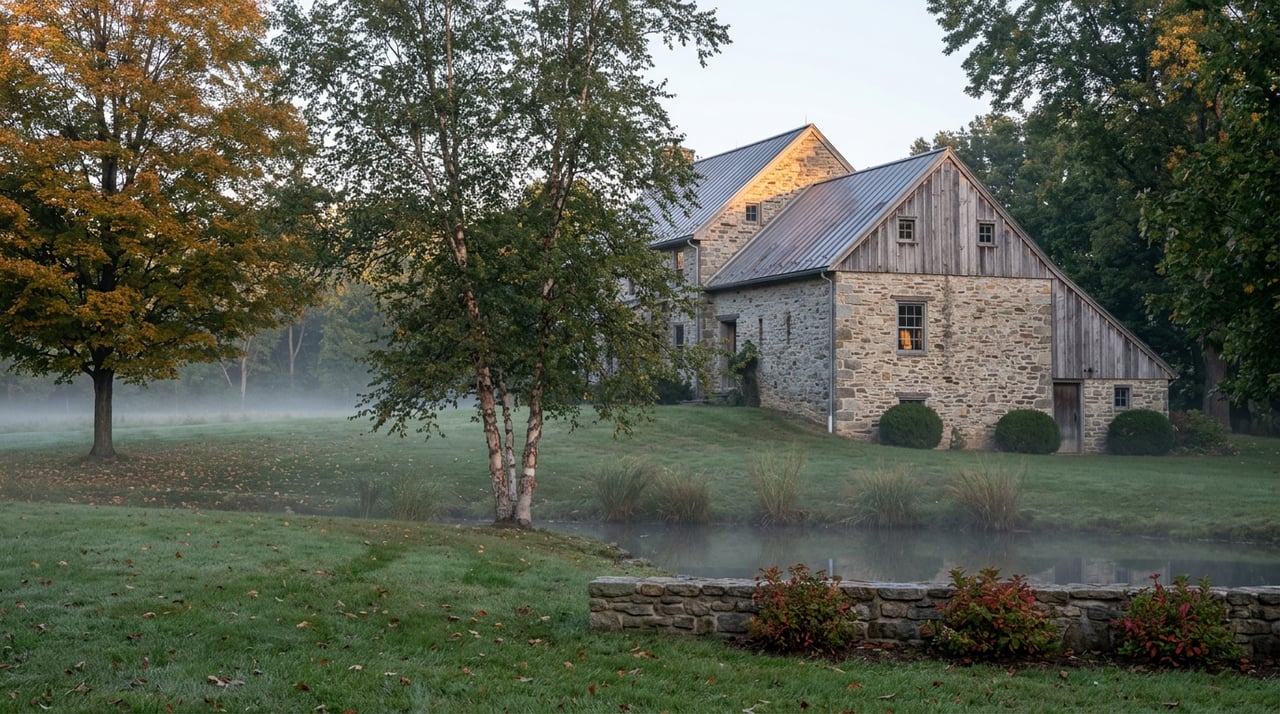
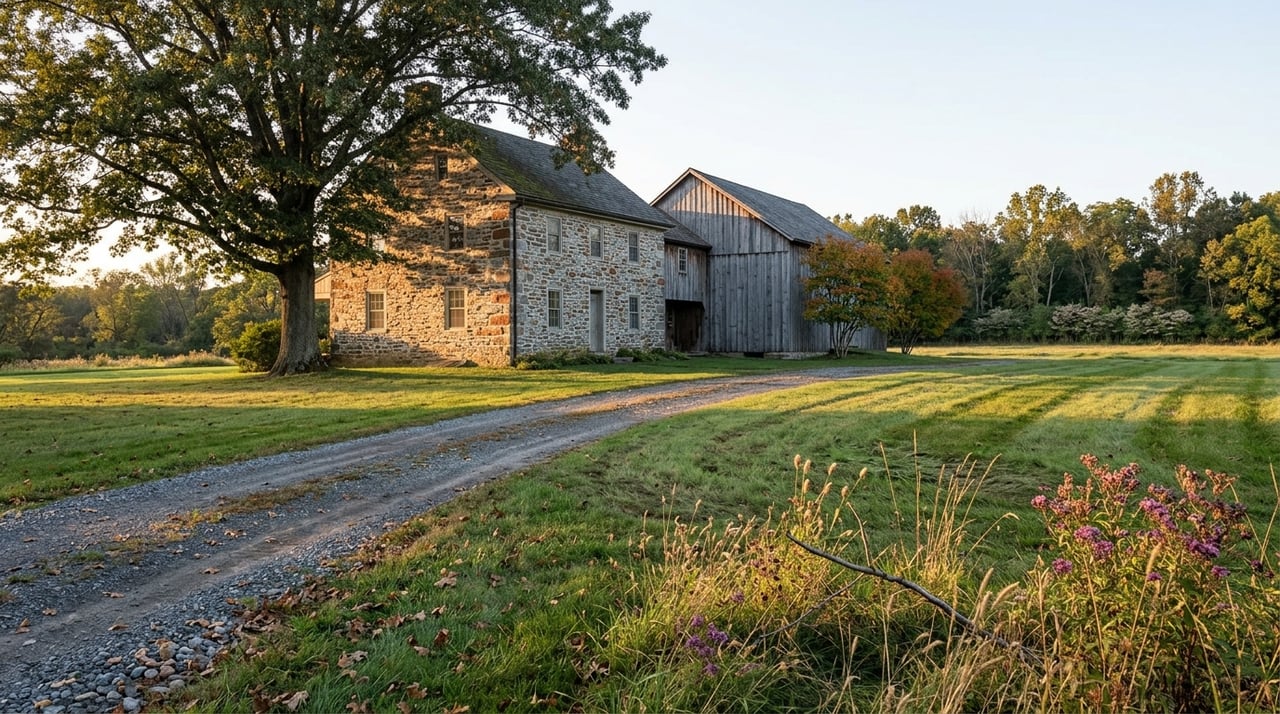
Older stone houses and barns reflect English and German architectural traditions, while the township’s history is closely tied to early Quaker settlement and long-term agricultural use. The result is a place where farmsteads, fences, outbuildings, and open fields still feel like part of the present, not just part of the past.
Preservation Shapes The Experience
One reason Buckingham still reads as open and agricultural is that preservation has been a clear local priority for decades. Residents approved land-preservation referendums in 1995, 1999, and 2008, and as of 2025, 6,475 acres have been permanently protected from development through easements and transfer of development rights.
That is not a small detail. It helps explain why the township continues to feel spacious and why fields, barns, and long rural views remain such a visible part of the setting.
Buckingham was also the first municipality in Bucks County to create a township land-preservation program. At the county level, the first two farms preserved under Bucks County’s agricultural preservation program in 1990 were both located in Buckingham Township.
What The Zoning Tells You
If you are considering property in Buckingham, it helps to know that the rural character is reinforced by policy as well as history. In the township’s AG-1 Agricultural District, the zoning ordinance states that agriculture is intended to remain the primary land use, with limited residential uses alongside agricultural uses and encouragement of large amounts of open space.
The ordinance also directs that preserved open space include productive soils and remain accessible to farm equipment. In practical terms, that supports a landscape pattern centered on working land rather than conventional subdivision development.
What Homes And Properties Often Look Like
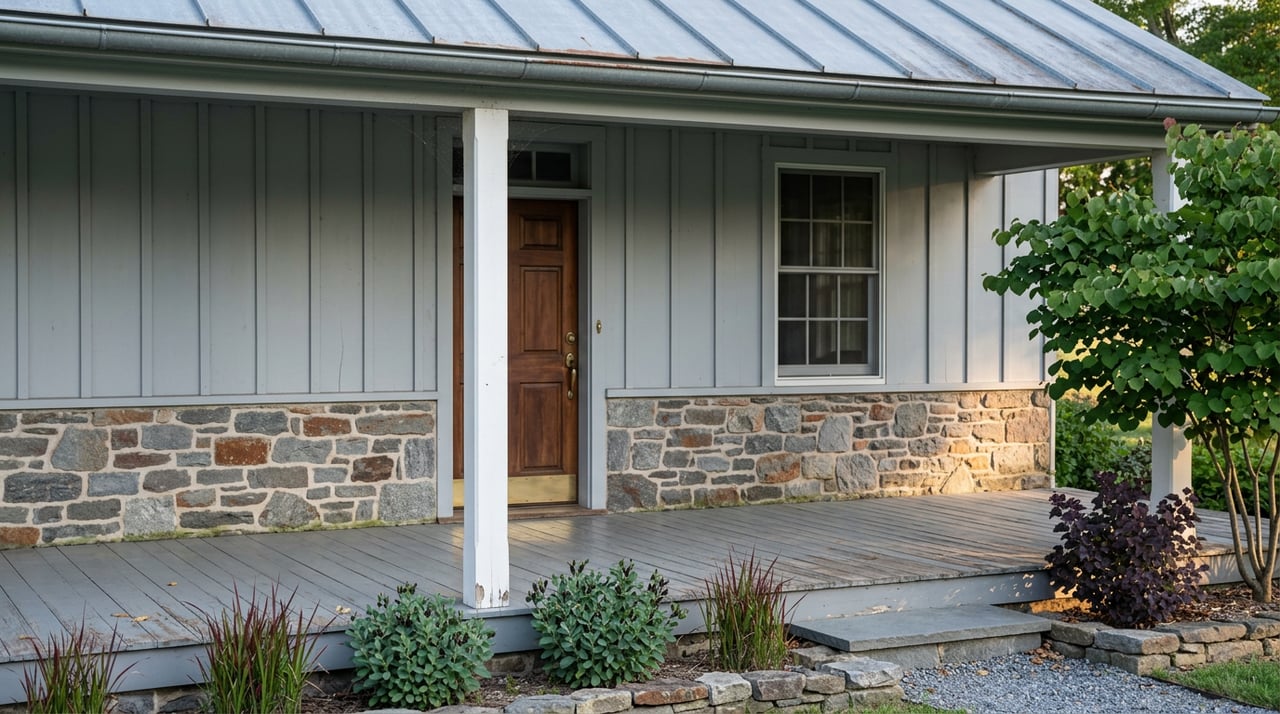
Buckingham’s property mix is best understood as varied but land-forward. Depending on the area, you may find preserved farmland, historic farmhouses, barns, acreage parcels, and village homes.
The township’s planning materials also reference farming-related, low-intensity nonresidential uses such as landscape nurseries, sod farms, and riding stables. That detail helps paint a fuller picture of everyday life here. Buckingham is not simply scenic countryside. It is a place where land use, stewardship, and rural function still play a visible role.
For buyers drawn to historic homes or properties with outbuildings and acreage, this can be especially appealing. The setting often offers more than square footage alone. It offers context, privacy, and a connection to the land.
A Stable, Owner-Oriented Housing Profile
Buckingham’s housing profile suggests a market where many owners put down long-term roots. The owner-occupied housing rate is 93.6%, and the median owner-occupied home value is $708,100.
The Census Bureau also reports a median household income of $190,230 and a median travel time to work of 33.7 minutes. Together, those figures point to a community where many households appear comfortable trading a longer drive for a quieter setting and more space.
As of July 2024, the township’s estimated population was 20,844, with a land area of 32.88 square miles and a density of 634.1 people per square mile. Even with regional access, Buckingham remains relatively spread out in feel.
How Buckingham Compares Nearby
If you are deciding among Bucks County locations, Buckingham stands apart from nearby places with more compact centers. Doylestown Borough is described by the borough as the county seat with museums, restaurants, services, nightlife, and a strong downtown cultural scene.
New Hope Borough, by contrast, is a smaller river town shaped by the Delaware River and Delaware Canal State Park, with arts, shops, historic inns, and tourism. Buckingham offers a different kind of experience. Its identity comes less from a dense center and more from crossroads, preserved fields, village pockets, and working-land scenery.
That difference matters when you think about your daily life. If you want a more rural cadence and a landscape that feels open and village-based, Buckingham may fit more naturally.
What Buyers Should Notice First
When you explore Buckingham, pay attention to the details that make the township feel cohesive.
- The transition between villages and open land
- The presence of barns, fences, and older stone buildings
- The feeling of the road network, especially smaller country lanes
- The amount of preserved open space visible from public roads
- The balance between privacy and regional accessibility
These are the qualities that often shape the experience of living here. They also help explain why Buckingham tends to resonate with buyers who value setting as much as the house itself.
Why Buckingham Appeals To Character-Property Buyers
Buckingham can be a strong match if you are looking beyond a standard suburban pattern. Buyers who appreciate historic houses, farmstead settings, acreage, or village-oriented living often respond to the township’s visual consistency and preserved landscape.
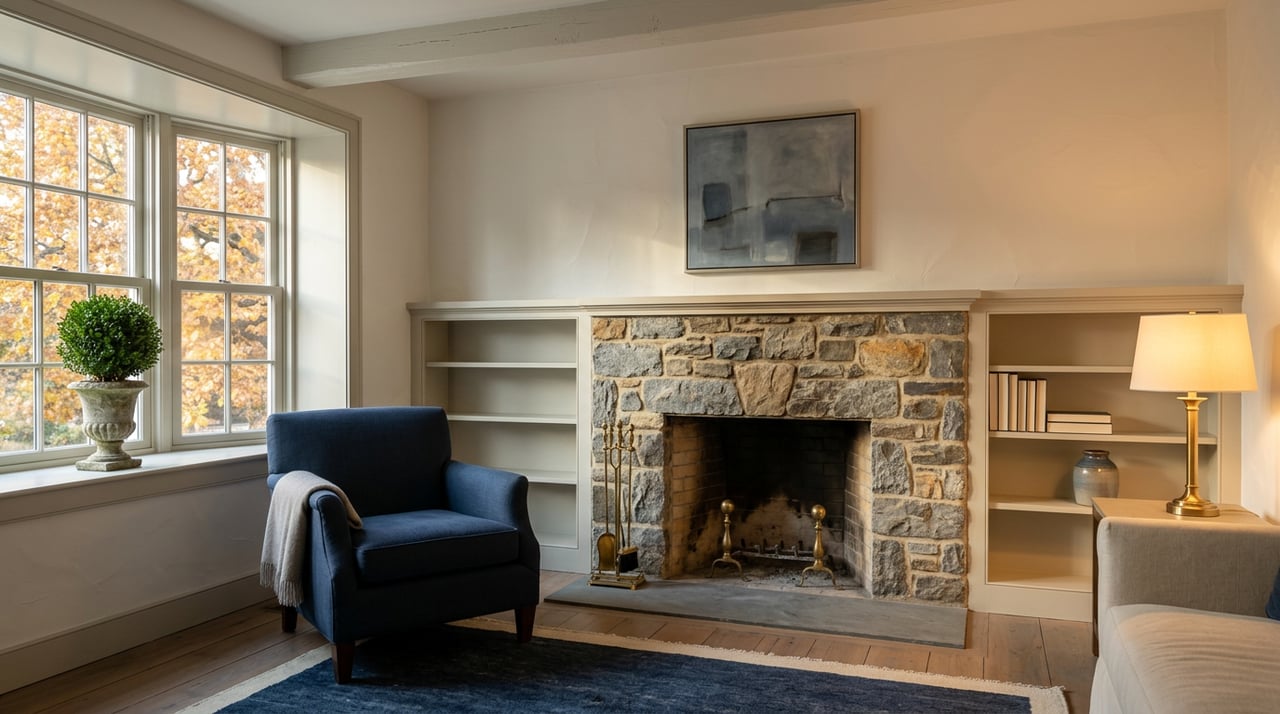
This is also a place where presentation and context matter. A farmhouse, barn property, or older village home is rarely just about room count. Its appeal is often tied to land, approach, architecture, and the way it sits within Buckingham’s network of lanes, fields, and hamlets.
Seeing Buckingham Through A Design Lens
From a design and lifestyle perspective, Buckingham offers something increasingly hard to replicate. The township’s older buildings, walls, hedgerows, bridges, and rural roads create a visual language that feels grounded and lasting.
For you, that may translate into more than scenery. It can mean a stronger sense of arrival, a more memorable setting, and a property story shaped by place as much as by interior finishes.
If you are buying or selling in a market like this, it helps to work with someone who understands how to read those details and communicate them well. In Buckingham, the landscape is not background. It is part of the value.
If you are considering a move to Buckingham or preparing to sell a character-rich home in this part of Bucks County, Jacqueline Haut Evans offers thoughtful guidance shaped by local perspective, design-minded storytelling, and a deep appreciation for land-forward living.
FAQs
What is Buckingham Township known for in Bucks County?
- Buckingham Township is known for its rolling countryside, rural lanes, preserved farmland, village pattern, and long agricultural history.
What kinds of homes can you find in Buckingham Township?
- Buyers may find historic farmhouses, barns, acreage properties, preserved farmland, and village homes across different parts of the township.
Why does Buckingham Township feel more rural than some nearby towns?
- Buckingham’s preserved land, agricultural zoning framework, village-and-hamlet layout, and network of country roads all contribute to a more rural feel.
How much land has Buckingham Township preserved?
- As of 2025, the township reports that 6,475 acres have been permanently protected from development through easements and transfer of development rights.
Is Buckingham Township one main town center?
- No. Buckingham is better understood as a collection of villages and hamlets rather than one compact town center.
How does Buckingham compare with Doylestown or New Hope?
- Buckingham offers a more open, agricultural, and village-based setting, while Doylestown and New Hope are known for more compact centers with cultural, shopping, dining, and tourism activity.
What is the housing profile like in Buckingham Township?
- Census data shows a high owner-occupied housing rate of 93.6%, a median owner-occupied home value of $708,100, and an estimated 2024 population of 20,844.