What does a township with no downtown and, as of the 2010 census, roughly 4,563 people spread across 37 square miles need with two seriously ambitious restaurants?
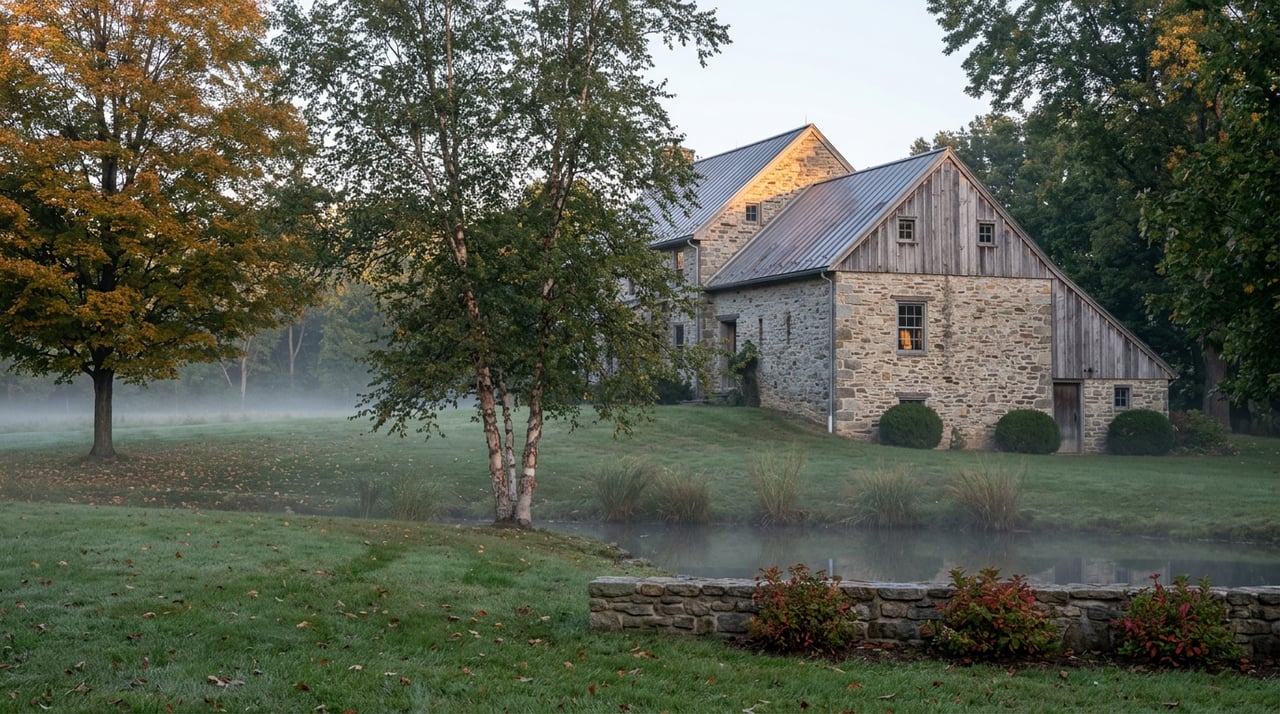
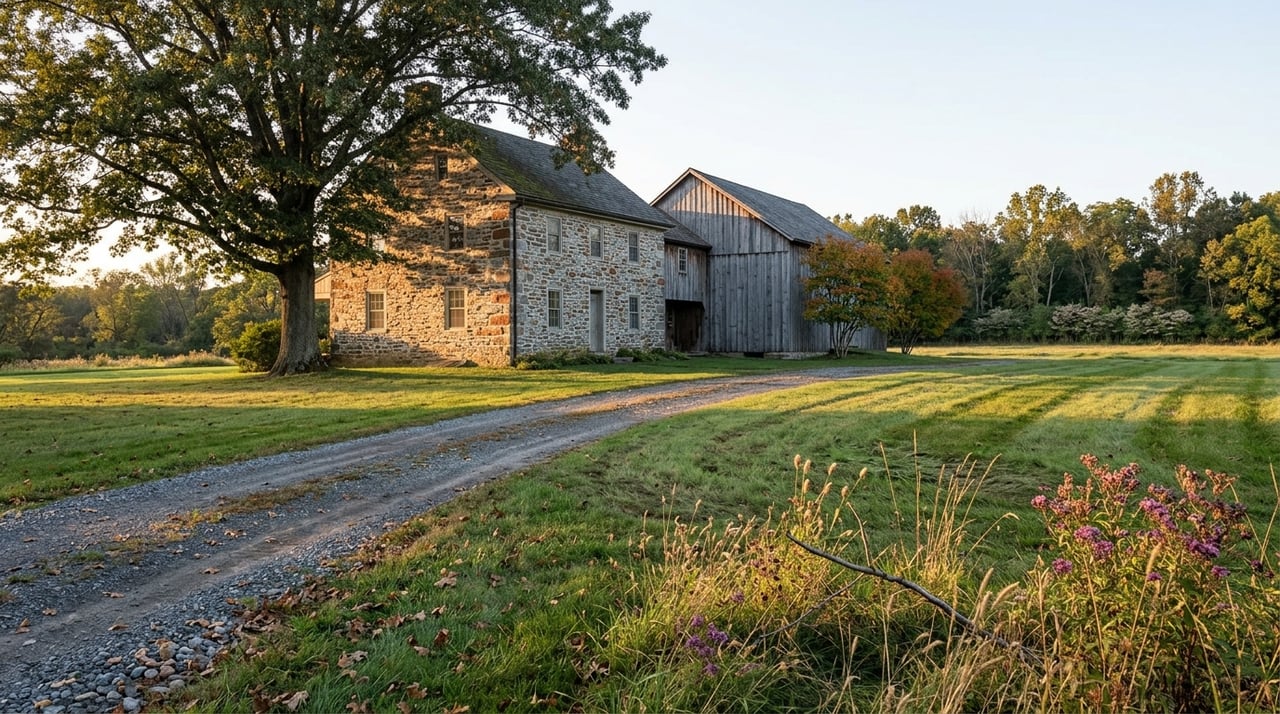
That's the question worth sitting with if you've driven Route 523 through Sergeantsville lately, or cut over to Rosemont on a Tuesday evening and found the parking spots gone by 6:30. Delaware Township has never had a commercial strip, a walkable downtown, or anything resembling a restaurant row. It has crossroads villages, farm fields, and a covered bridge that shows up on the township's own municipal seal. And in the span of about eighteen months, it also picked up two kitchens run by chefs who could be cooking anywhere.
Two Kitchens, No Restaurant Row
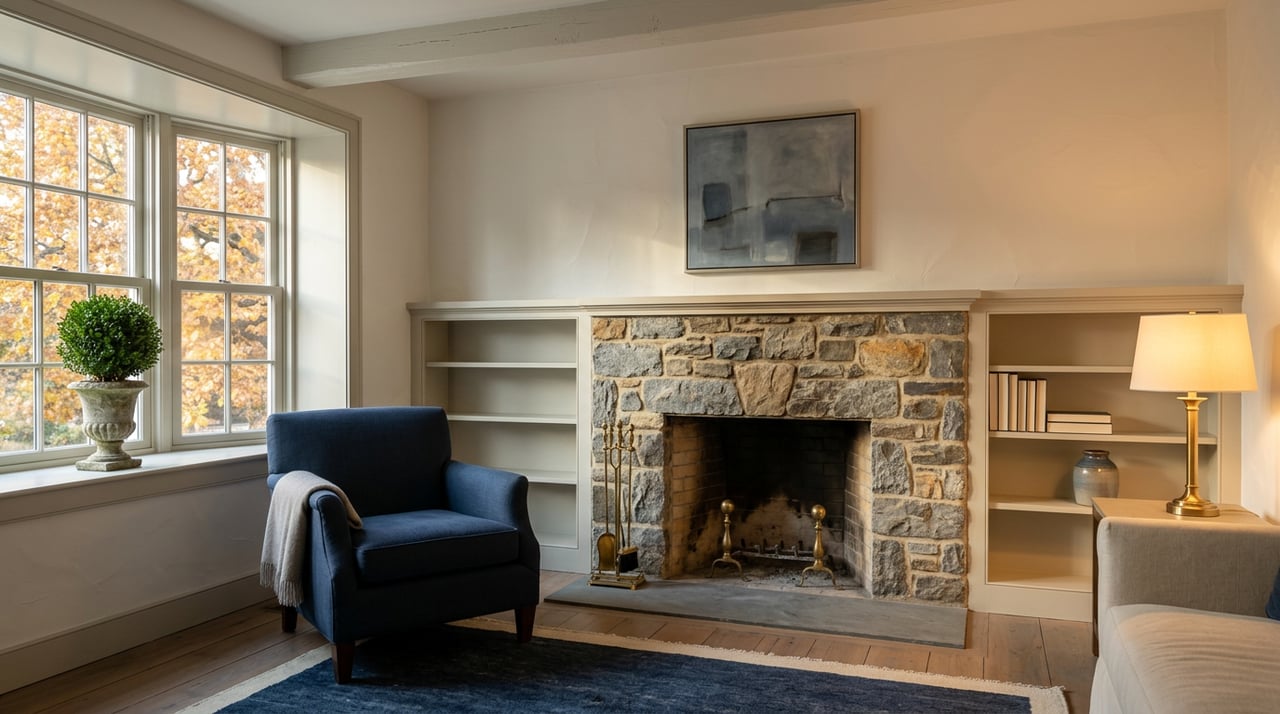
The Sergeantsville Inn sits at the center of the village, in a stone building that started life in the early 1700s as a private residence in what was then called Skunktown. Over the centuries it became a grain and feed store, then a grocery, an ice cream parlor, and a pelt trading post before it opened as a restaurant. In 2024, chef Sean Gray took over the kitchen. Gray made his name at Momofuku Ko in Manhattan's East Village, where he won two Michelin stars before the restaurant closed. He grew up a few miles from Sergeantsville, across the river in Bucks County, and by his own description he's built a menu that can wear whatever hat a diner wants that night.
Three miles west, in the even smaller village of Rosemont, chef Matthew Ridgway runs The Pass out of a converted general store. The menu is French-inspired and prix fixe, rewritten roughly every two weeks, with a six-course discovery option for anyone who wants the full arc of what the kitchen can do.
Neither restaurant is trying to be a country inn serving safe comfort food to weekenders. Both are run by chefs who trained for rooms far more demanding than a Hunterdon County crossroads, and both chose to bring that training here anyway. That's not an accident of rural charm. It's a bet that a place with no existing food scene at all gives a chef more room to define the terms than a crowded restaurant row ever would.
The Blue Plate Test
The clearest evidence of that bet is the way Sergeantsville Inn splits its own hours in half. From 4 to 6 p.m. daily, the blue plate specials run: deviled eggs, a pressed pickle sandwich, and fried chicken drumsticks at five dollars apiece, the same quadruple-fried technique Gray used to help win those Michelin stars. Regulars file in for that window specifically.
Then the room shifts. The dinner menu runs a dry-aged New York strip alongside a halibut dish served with cauliflower and capers on vintage china, and a large-format côte de boeuf for two that runs $150. The wine list tops out at $750 a bottle, though plenty of $75 bottles are on it too. Chicken legs at $5 and a $750 bottle of wine, under the same eighteenth-century roof, on the same night. That range is the point. The Inn isn't choosing between being a neighborhood tavern and a destination restaurant. It's built to be both, on purpose, which is exactly the kind of flexibility a chef only gets when there's no competing restaurant across the street setting expectations for him.
Here's how the two kitchens compare on paper:
| Sergeantsville Inn | The Pass | |
|---|---|---|
| Village | Sergeantsville | Rosemont |
| Building | 1734 stone farmhouse, formerly a feed store and pelt trading post | Converted historic general store |
| Chef | Sean Gray, formerly of Momofuku Ko (two Michelin stars) | Matthew Ridgway |
| Format | Blue plates 4-6 p.m. daily, full dinner menu evenings | French-inspired prix fixe, menu changes roughly every two weeks |
| Entry point | $5 fried chicken drumsticks | Prix fixe, with a six-course discovery menu option |
| High end | $150 côte de boeuf for two, up to $750 bottles | Dishes like foie gras mousse and veal sweetbreads |
Three miles of farm road separate them, and there's essentially nothing commercial in between.
Three Miles West, in an Old General Store
Rosemont itself is barely a village, more a scatter of houses around a cemetery and an antique shop called Lots of Time, but The Pass has made it a destination in its own right. Ridgway's dishes lean toward the technical end of French cooking, guinea hen pot-au-feu, poached scallops, dishes that assume the diner drove there specifically for the food rather than wandering in. That's the same wager Gray made three miles away, just executed in a different register.
Neither restaurant advertises itself as a rural retreat from the city. Both function as if they were competing for the same tables you'd find in Manhattan or Center City, just with a longer drive and a stone building instead of a storefront.
What's Around Both Kitchens
Across the street from Sergeantsville Inn is the Farmer's Table, a small country store that took over the former Sugar Maple Jerseys location and now stocks only products sourced from local farms in and around the township. It's the kind of stop that turns a dinner reservation into a whole evening, a jar of local honey or a wedge of cheese picked up on the way in or out.
Between the two restaurants runs the Wickecheoke Creek, crossed by Green Sergeant's Covered Bridge, the last historic covered bridge left in New Jersey. It was built in 1872, designed by Lambertville bridge builder Charles Ogden Holcombe, and it's been on the National Register of Historic Places since 1974. The bridge shows up on the township's own municipal seal, which tells you how central it is to how Delaware Township thinks of itself. Local history keeps note of an old bit of folklore about horse-drawn travelers who'd mistake the covered structure for a barn or a house and doze off right there in the middle of it.
If you want to stretch your legs before or after either dinner, there's a marked trail through the woods along Plum Brook, with a trailhead across from the parking area at 39 Pine Hill Road. Follow it up the rocky hill and you'll pass Pine Hill Cemetery, where Green Sergeant, namesake of the bridge, is buried.
A Township Without a Downtown
None of this reads like a food scene in the way that word usually gets used. There's no cluster of storefronts, no strip to walk after dinner, no second or third restaurant competing for the same table. Just two ambitious kitchens, three miles apart, connected by farm roads and a 150-year-old covered bridge, in a township that covers more ground than it holds people.
That absence is worth noticing rather than explaining away. The Sergeantsville Inn and The Pass didn't arrive because Delaware Township built the infrastructure for a dining destination. They arrived because two chefs decided the lack of infrastructure was the opportunity, a blank room to define on their own terms rather than a crowded one to compete inside.
The township keeps its own quieter rhythms running in the background. Bridge painting is scheduled to begin August 24, road work started on Upper Creek Road in mid-July, and Sarah Dilts Park, usually the busiest recreation spot in town for its ball fields and courts, is currently closed to the public. None of that changes what's happening at either restaurant. It's just the ordinary texture of a small township going about its business while two kitchens quietly raise the bar on what a Tuesday night here can look like.
If you already call Delaware Township home, you've probably felt this shift firsthand, maybe over a five-dollar drumstick at 4:15 on a weekday, maybe over a six-course tasting menu you didn't expect to find three miles from your own driveway. If you're weighing whether a place like this, with this much land, this little downtown, and this much unexpected ambition, might be where you want to put down roots, I'd love to talk through what that looks like. You can reach out to Jacqueline Haut Evans any time to schedule a free consultation, or browse more on the Delaware Township neighborhood page to see what else defines life out here.